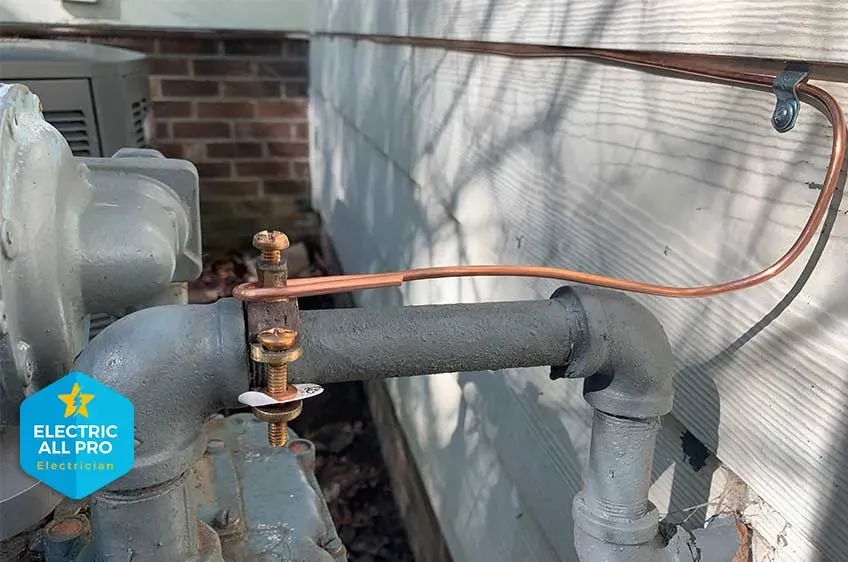
Real Raleigh Install.Bonding clamp and copper jumper — our work.
NC Licensed L.32531Electrical Contractor
$2M CoverageGeneral Liability Insurance
5.0 RatingGoogle Reviews
Since 20186,000+ Jobs Completed
Safety-Driven Electrical Service
CSST Gas Line Bonding Overview
The yellow flexible gas tubing (CSST) running through most Raleigh homes built or re-piped since the 1990s has thin walls — a nearby lightning strike can arc through unbonded CSST and perforate it, causing a gas leak or fire. Bonding ties the gas piping to your home's grounding system with a clamp and heavy copper conductor so that energy has a safe path to ground. It's required by the fuel gas code, and it's one of the least expensive safety upgrades a home can get.
Lightning Defense
A bonded gas line gives strike energy a path to ground instead of through the tubing wall.
Code Compliance
NFPA 54 requires CSST bonding — inspectors and insurers increasingly check for it.
Tested Connection
Every bond is continuity-tested back to the grounding electrode system before we leave.
When To Schedule CSST Gas Line Bonding
Most homeowners find out about CSST bonding from a home inspection report — but you don't have to wait for one. Book this service if any of these apply:
One-Visit FixTypically done in under two hours.
6 AWG
Copper Bonding Jumper — The Code Minimum
Signs You Should Book This Service
Yellow flexible gas tubing is visible and has no bonding clamp
A home inspector flagged unbonded CSST on your report
Your insurer asked for proof of gas line bonding
The house was built or re-piped between the 1990s and today
New gas appliances were added without an electrical check
Lightning struck nearby and you want the system verified
Common Reasons Homeowners Book This Service
Home-inspection findings, insurance requirements, new gas appliance hookups, and lightning-prone neighborhoods — bonded with a listed clamp and tested copper path to ground.
Bonding is a small job that has to be done exactly right — the clamp location, conductor size, and the connection to your grounding system all come from code and manufacturer instructions.
A Straight Path to GroundListed clamp, 6 AWG copper, one continuous run to the grounding electrode system — no splices, no shortcuts.
1
Gas & Grounding Assessment
We locate where gas service enters, identify the CSST manufacturer and routing, and verify your grounding electrode system is intact enough to bond to.
CSST type identifiedGrounding system checked
2
Clamp & Conductor Installation
A listed bonding clamp goes on the rigid pipe near where gas service enters the home, and a 6 AWG copper conductor runs unbroken to the grounding electrode system.
Listed clamp installedContinuous copper run
3
Continuity Testing & Labeling
We test continuity and resistance from the gas piping to ground, label the bond point so inspectors can find it, and document the work for your records or insurer.
Continuity verifiedDocumented for records
Not Sure If Your CSST Is Bonded?
Send us a photo of your gas meter area — we can usually tell you in minutes whether you need this.
Central North Carolina gets real lightning seasons. Bonding is the one small job that stands between a nearby strike and the thin-walled gas tubing running through your floors and walls.
One Clamp. One Wire.The cheapest fire prevention a gas home can buy.
Lightning Energy Gets A Safe PathA nearby strike induces thousands of volts onto metal systems. Bonded CSST discharges it to ground; unbonded CSST can arc through its own wall and ignite the gas inside.
Passes Inspections And Insurance ChecksUnbonded CSST is one of the most common home-inspection findings in Triangle real estate deals — fixing it before listing removes a negotiation chip.
Done And Documented In One VisitUnder two hours for most homes, with continuity readings recorded — paperwork your inspector, insurer, or buyer can verify.
Cost Overview
CSST Gas Line Bonding Pricing Guidance
Bonding is one of the most affordable safety services we offer in Raleigh, NC. The variables are simple — where the gas enters, and how far the grounding system is from it.
Distance To GroundA short conductor run from the gas entry point to the grounding electrode is the low end; long or complex routes add wire and labor.
Access ConditionsCrawl spaces, finished basements, and tight meter locations take more time than an open exterior wall.
Grounding System ConditionIf the home's grounding electrode system itself needs repair or a new ground rod, that's quoted as a small add-on.
Typical Price Range
$250 – $600
Includes listed bonding clamp, 6 AWG copper conductor, labor, and continuity testing with documentation
Exact quote confirmed after seeing the gas entry and grounding layout
Service Details
What’s Included / What’s Not
Bonding is a tightly scoped electrical service. Here’s exactly what the visit covers—and the gas-side work that belongs to a plumber.
Included
Listed Bonding ClampA clamp listed for the purpose, placed on rigid pipe near where gas service enters — per the CSST manufacturer's instructions.
6 AWG Copper Conductor RunOne continuous copper run from the clamp to your grounding electrode system, secured and protected along the way.
Continuity and Resistance TestingThe bond is meter-tested back to ground so it actually does its job — not just visually "looks bonded."
Labeling and DocumentationThe bond point labeled for inspectors, with photos and readings for your records, insurer, or closing file.
Not Included
Gas Leak Repair or Re-PipingAnything touching the gas inside the pipe is licensed plumbing work — we'll flag issues we see and refer you well.
CSST ReplacementBonding protects existing tubing; physically replacing damaged CSST is a gas-piping project.
Grounding Electrode RebuildsIf the home's ground rods or connections are failed, that repair is quoted separately before bonding proceeds.
Appliance ConnectionsHooking up ranges, logs, or water heaters to gas is the installer's or plumber's scope.
Service Options
Optional Add-Ons for CSST Bonding Visits
Since we're already at the panel and the grounding system, these protection upgrades pair naturally with a bonding visit in Raleigh, NC.
Whole-House Surge Protection
The same storms that threaten CSST also cook electronics. A panel-mounted surge protector installs in the same visit.
Corroded clamps or a missing second rod weaken every protection system in the house — fixed while we're at the electrode system.
Panel & Grounding Checkup
A quick once-over of breakers, terminations, and grounding while the panel is open — small findings caught before they grow.
Local Coverage
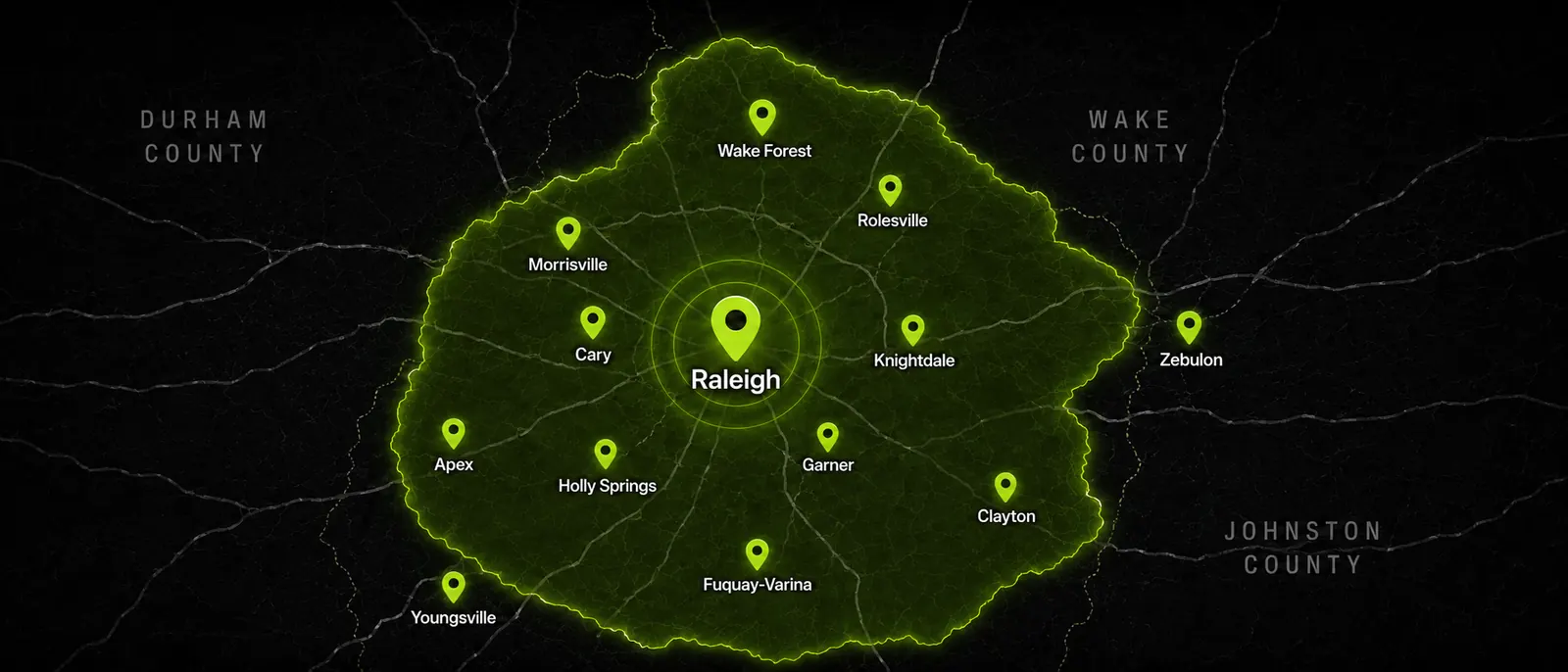
Proudly Serving Raleigh, NC & The Surrounding Triangle
Electric All Pro provides professional CSST gas line bonding services throughout
Raleigh, NC
and the surrounding Triangle. Select your city below to confirm we service your area.
CSST bonding sits where the fuel gas code and the National Electrical Code meet — both require gas piping systems to be bonded, and CSST manufacturers add their own instructions that carry the force of code.
1. CSST Must Be Bonded
The National Fuel Gas Code requires CSST systems to be bonded to the electrical grounding system — an unbonded run is a code violation regardless of how well it carries gas.
NEC Ref: NFPA 54 §7.12
CSST gas piping systems shall be bonded to the electrical service grounding electrode system.
2. Minimum 6 AWG Copper
The bonding jumper must be copper, sized no smaller than 6 AWG, and connected with a listed clamp — not a hose clamp or wrap of bare wire.
NEC Ref: NFPA 54 §7.12.2
The bonding jumper shall be not smaller than 6 AWG copper wire, attached with listed fittings.
3. Bonded To The Grounding System
The conductor must land on the grounding electrode system — the same ground rods and connections that protect your electrical service — so gas piping can never float at a different potential.
NEC Ref: NEC 250.104(B)
Metal piping systems likely to become energized shall be bonded to the service grounding system.
4. Manufacturer Instructions Govern
Each CSST brand's installation instructions — clamp placement, conductor length limits — are enforceable under the code. We follow the listing for the product actually in your home.
NEC Ref: NEC 110.3(B)
Listed equipment shall be installed in accordance with instructions included in the listing.
Raleigh homeowners call us for safety work like bonding, inspections, and repairs — here's what recent Google reviews say about working with Electric All Pro.
“Honesty made me look no further.”
Hugo helped me fix my issue over the phone. He could have easily taken advantage of me, but his honesty made me realize I need to look no further for my electrical needs.
RWRobert W.Raleigh, NC 2026
“Everything up to code, explained clearly.”
Outstanding service start to finish — professional, prompt, and they made sure everything was up to code, walking me through the work as it happened.
TFTristan F.Raleigh, NC 2026
“Polite, good work, fair pricing.”
Very polite, good work, and fair pricing — exactly what you want from an electrician handling safety work on your home.
Look near your water heater, furnace, or gas meter for flexible corrugated tubing with a yellow (sometimes black) jacket. Homes built or re-piped from the 1990s onward very commonly have it.
How much does CSST bonding cost in Raleigh?
Typically $250–$600 including the listed clamp, 6 AWG copper conductor, labor, and continuity testing. Long conductor runs or grounding system repairs can add to that — confirmed before work starts.
Why does CSST need bonding when black iron pipe didn't?
CSST walls are far thinner than traditional black iron pipe. A nearby lightning strike can induce enough energy to arc through an unbonded run and perforate it — bonding gives that energy a safe path to ground instead.
Is bonding the same as grounding?
They're related but different: bonding connects metal systems together so they stay at the same electrical potential; grounding connects that bonded system to the earth. CSST bonding does the first, using your home's existing grounding electrodes for the second.
My CSST is the black 'arc-resistant' type — do I still need bonding?
Usually yes. Most black arc-resistant CSST brands still require bonding per their installation instructions, which are enforceable under code. We check the specific product's listing before telling you it's optional.
How long does the work take?
Most bonding jobs are done in one visit of one to two hours, including testing and labeling. It's a same-week appointment in most of our service area.